Our second visit to Cabinda was supposed to be a short stop while we waited for the ferry to Soyo. But Cabinda, it seems, had more to share with us.
Returning from Gabon and the Republic of Congo, we spent a few days in Pointe-Noire before heading back into Cabinda. Then began the paperwork, the red tape and the familiar promise: “Tomorrow.”
Tomorrow became tomorrow… and then tomorrow again.
Travelling teaches you patience, sometimes with more enthusiasm than you would like! Fortunately, this unexpected pause has given us experiences we would have missed had everything gone according to plan.
Cabinda itself has an unusual position on the map. It belongs to Angola, but is separated from the rest of the country by a strip of the Democratic Republic of Congo. With the Republic of Congo to its north and the Atlantic Ocean to its west, it is an Angolan exclave—which helps explain why a ferry is such an important connection to the rest of Angola.
A warm welcome and an unforgettable Sunday
We have been staying at a Catholic mission, where the priests have been wonderfully welcoming and protective of us. Their kindness has made the uncertainty of our ferry departure much easier to bear. Every time we come back the priests raises his hands and says welcome back, again and again and now we have started doing it too 🙂 we are back with a smile and gratitude to their hospitality.
Then we met Roger, who invited us to Sunday’s church service.
And what a treat we were in for.
We were welcomed as guests at a service in the Diocese of Cabinda and given seats with an excellent view of the celebrations. The bishop presided as new priests were ordained, and the choir was extraordinary.
We spent five hours there, yet it felt like one. There was so much happening: singing, ceremony, colour, movement and a sense of community that was impossible not to be drawn into.
For me, it brought back memories of boarding school. For Tony, it stirred memories of his Roman Catholic upbringing. We each recognized something familiar, while experiencing something entirely new.
Different communities wore their own distinctive colours, making the gathering a beautiful patchwork of people and places.
After Communion came the offertory. People lined up and danced their way towards the large collection baskets. Giving had a rhythm to it, and the joy was wonderful to witness. Even I did a little dance to the basket, was fun to be part of.
Then the different groups brought forward their gifts: live roosters, bags of rice, prepared meals, enormous bunches of bananas and even wine, everything was game….
We were told that more than 2,000 people attended. Imagine the generosity gathered together in that one place, powerful stuff!
Later, we learned that the bishop helps decide how the offerings are distributed. Some food came to the mission where we are staying, which accommodates scholars and feeds many people. Seeing those gifts become practical support for the community made the whole experience even more meaningful.
Colour in the market
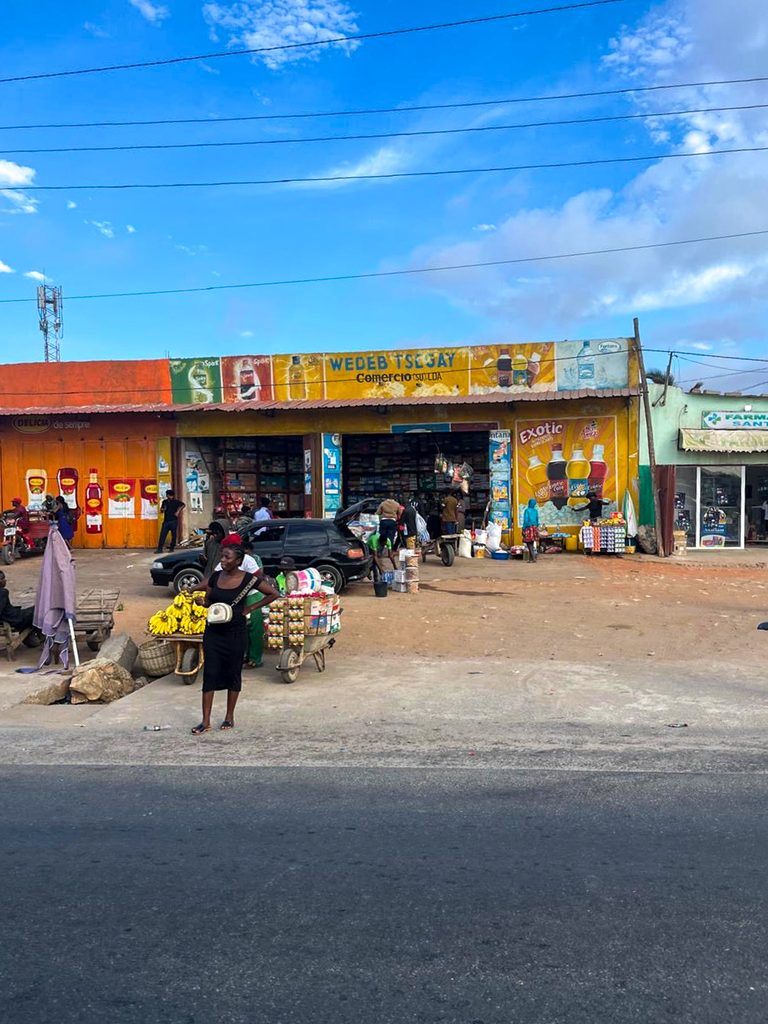
After the service, we walked through a market, where Tony bought two dresses for me in the most beautiful colours.
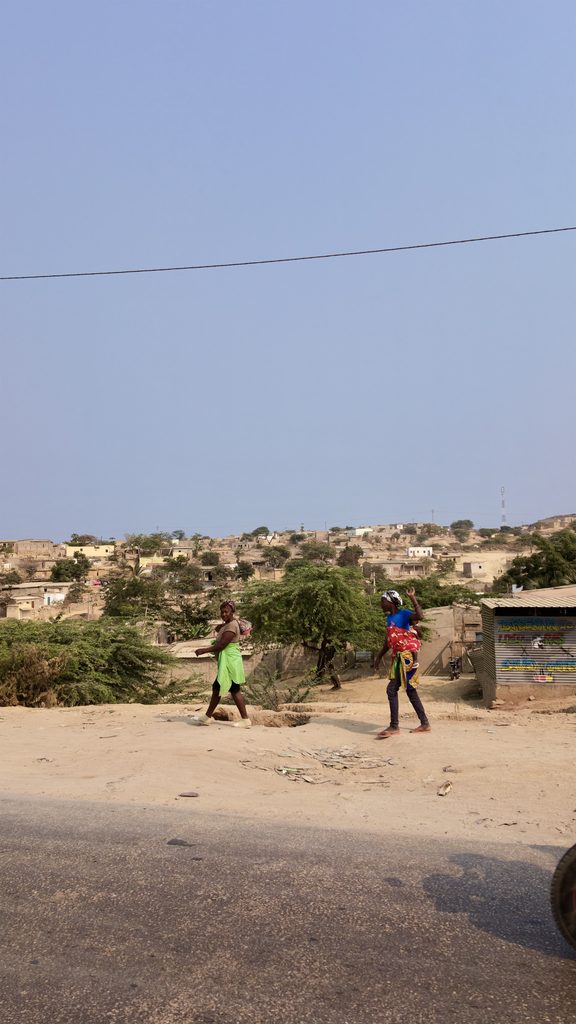
Everywhere we have travelled, I have admired how beautifully the women dress. Their fabrics, patterns and combinations of colour are a pleasure to see—and I was delighted to take a little of that colour away with me.
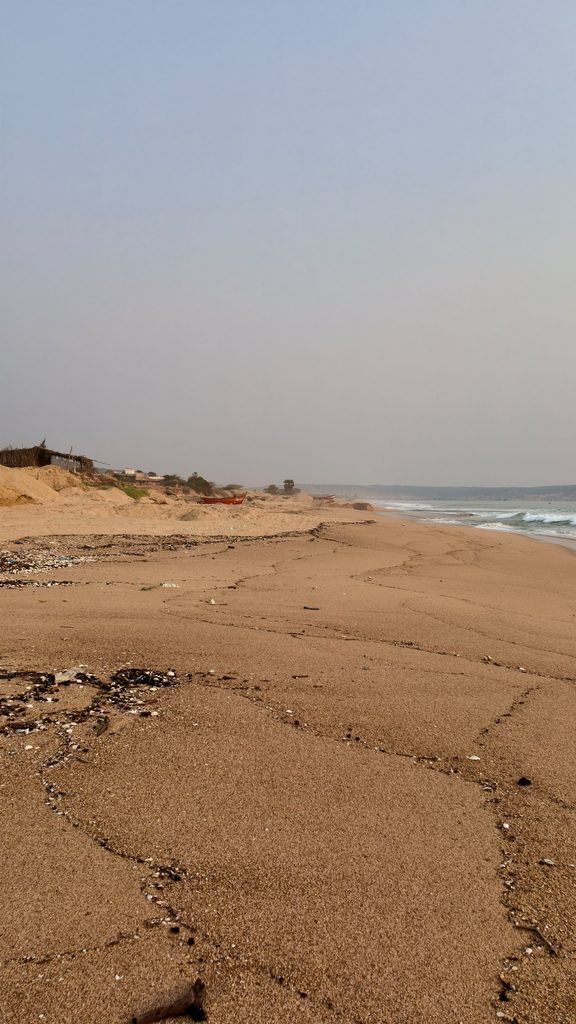
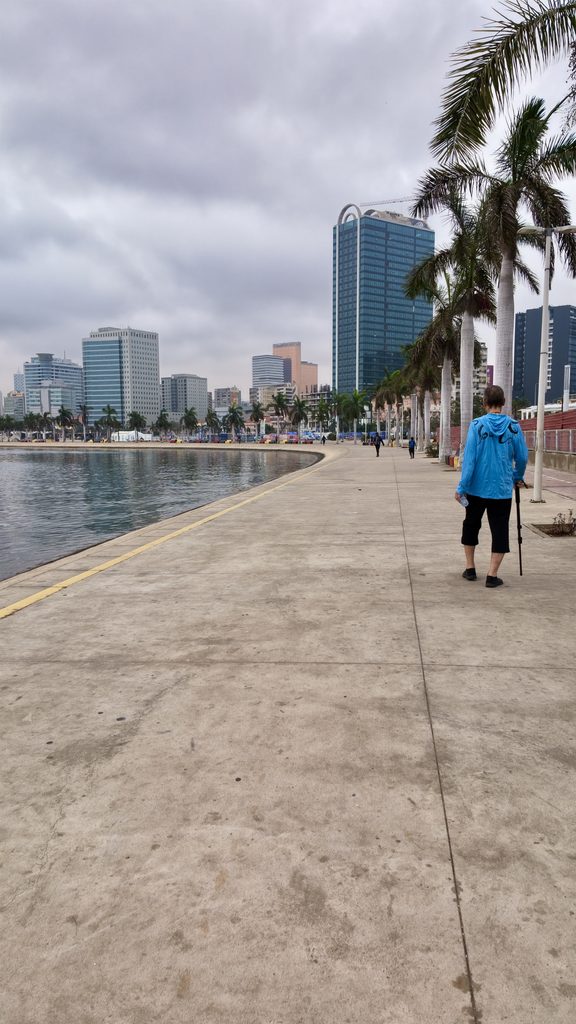
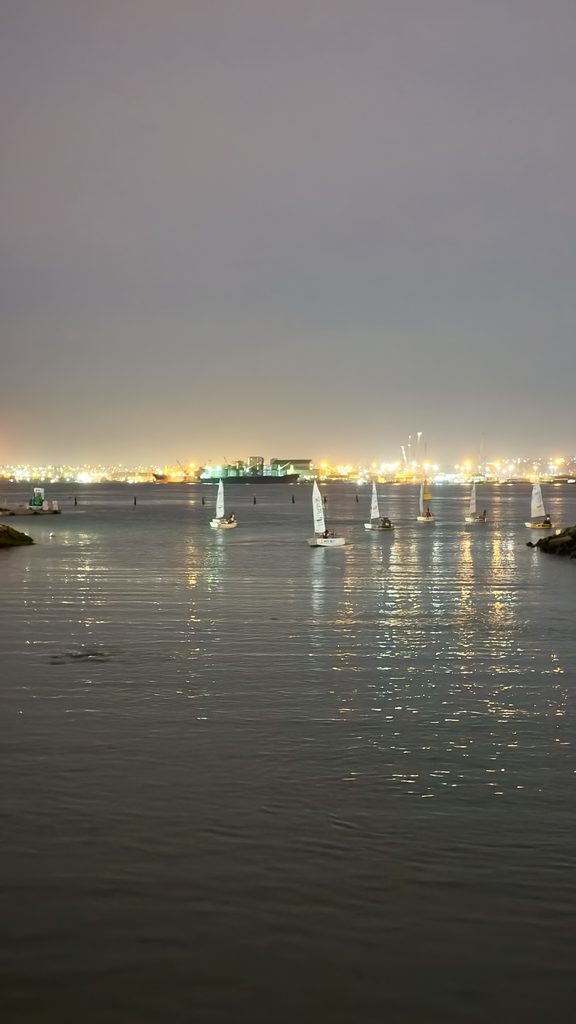
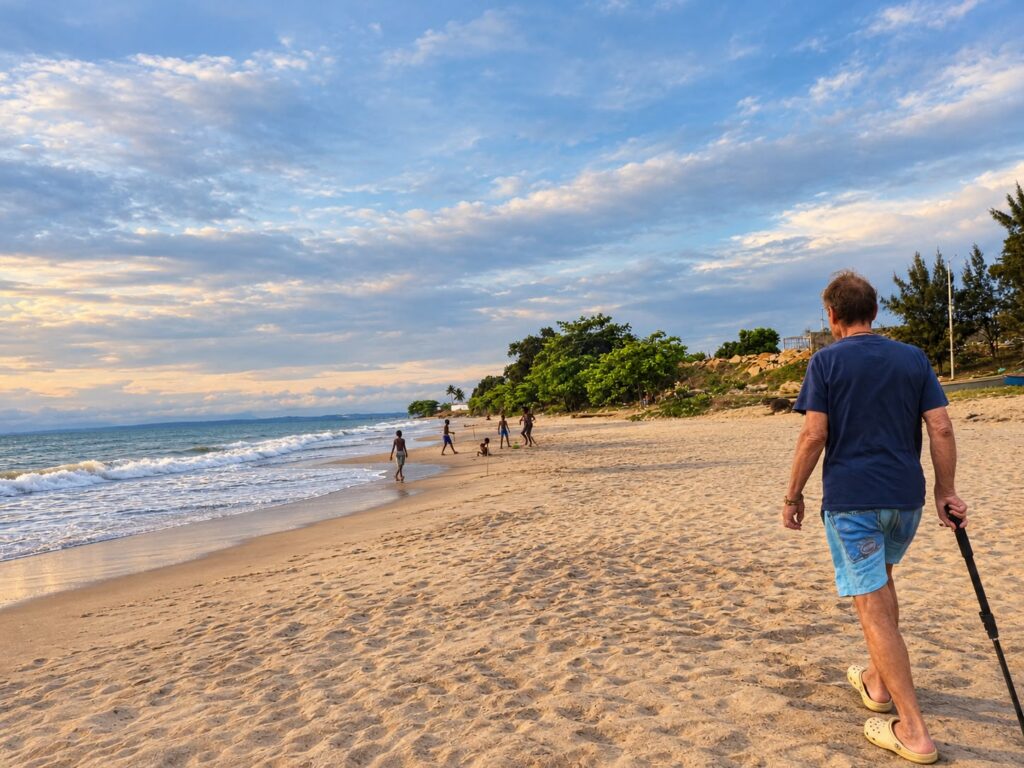
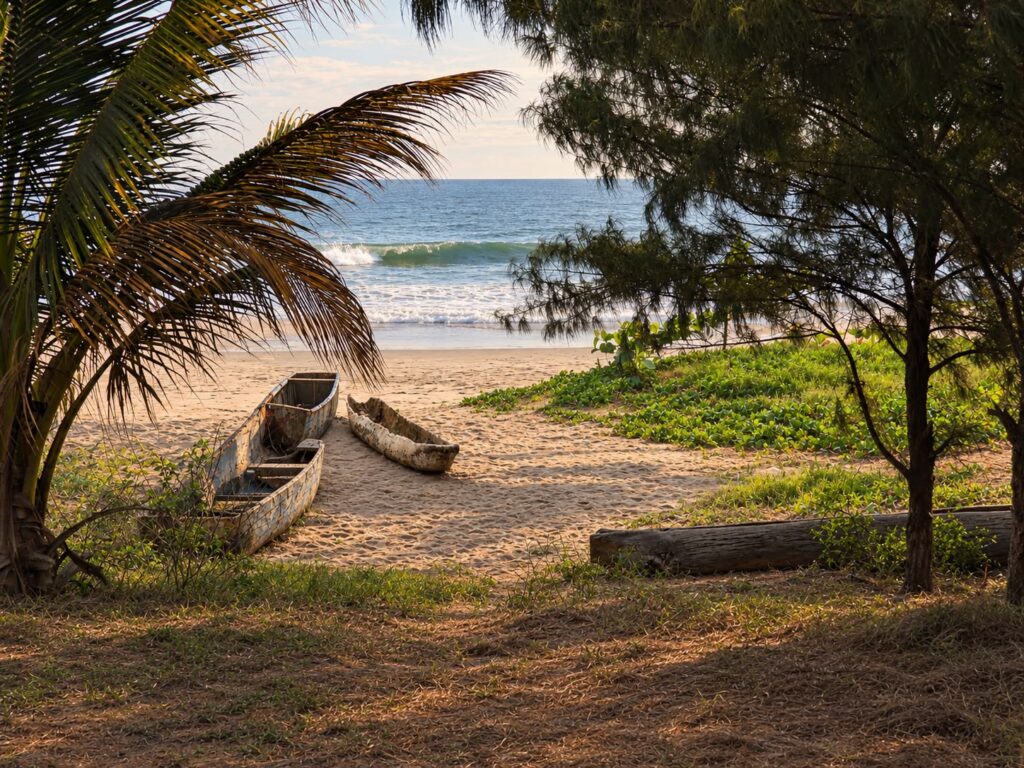
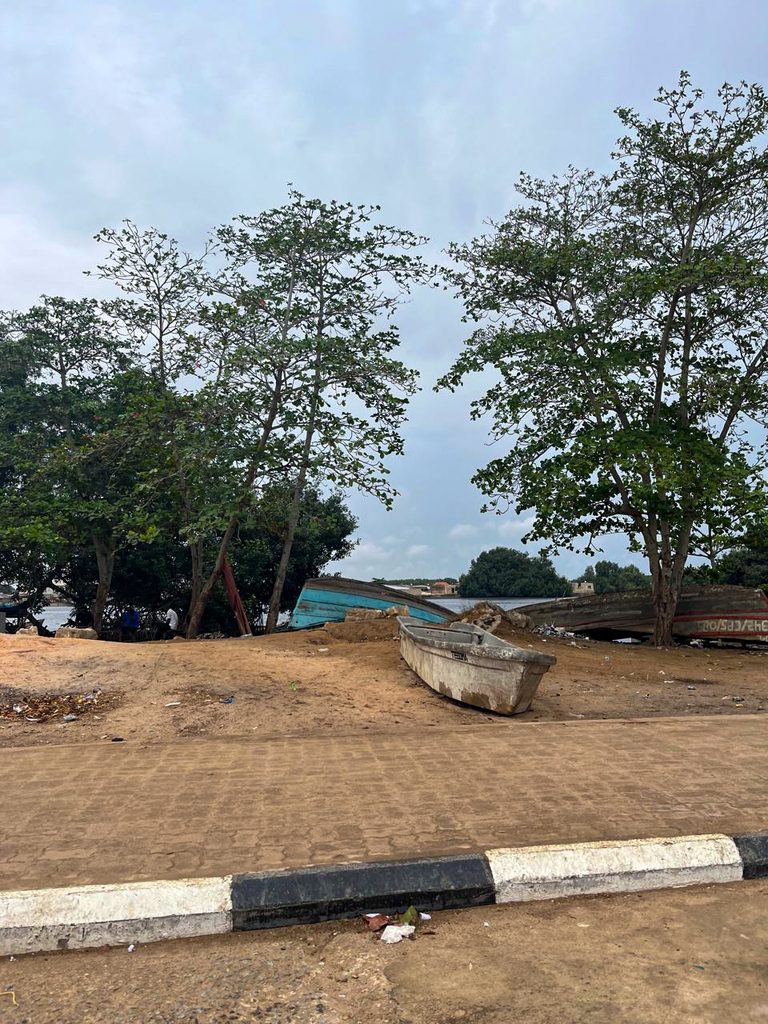
Between ferry enquiries, we have also been making time for walks on the beach. Having nowhere else we can go just yet has given us time to look more closely at where we are.
Roger, Google Translate and a museum full of surprises
This morning, Roger took us to the Cabinda museum. Thank goodness for him and Google Translate, because the tour was in Portuguese!
The Regional Museum of Cabinda opened on 18 May 1986. Its collections preserve local history and traditions, including those connected to the old kingdoms of the region. Cabinda’s history also includes the Treaty of Simulambuco, signed in 1885, which established a Portuguese protectorate known as Portuguese Congo.
Inside, we found stories told through sculptures, musical instruments, fabrics, food and everyday objects.
Among the most fascinating were the soapstone figures. Our guides explained that some were associated with the burials of important people and beliefs about their passage into the afterlife.
There were also traditional masks, some of which I found quite unsettling to look at. They were a reminder of how much meaning an object can hold within a tradition we are only beginning to understand.
Original musical instruments showed how villagers communicated with people living some distance away. Long before mobile phones, communities had their own ways of sending messages across the landscape.
Displays of fabrics represented different areas and communities in the province. That immediately brought us back to Sunday’s service, where the groups had worn their distinctive colours. It was lovely to see a connection between the museum displays and a living tradition we had just witnessed.
One of my favourite explanations concerned the hairstyles on little statues of women. As it was translated to us, three pointed sections meant a woman was preparing to marry and was no longer available, while six meant she was looking for a partner.
Quite a message to carry in your hairstyle!
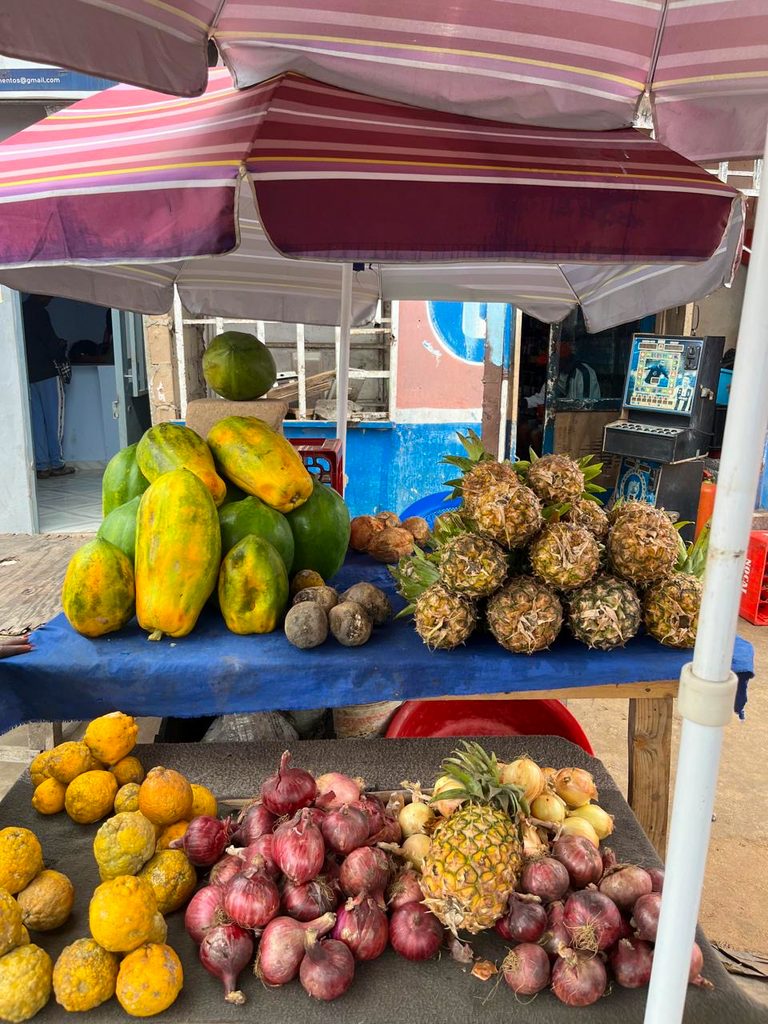
There were displays of cassava and other traditional foods, along with plants and foods described as being used for ailments. We also saw examples of money from different periods and crude-oil samples linked to Cabinda’s petroleum history.
Then there was an early toothbrush with a tongue-cleaning attachment. That caught my attention: something I tend to associate with modern dental products was already there in an older object. Apparently, some “new” ideas have been around for quite a while.
And one sculpture certainly stopped us in our tracks: a male figure with a penis almost as long as his leg. Whatever its precise meaning, it was an exhibit you were unlikely to walk past without noticing! I am sure the guide told us some meaning but I missed that 🙂
The forest – and the feeling that stayed with me
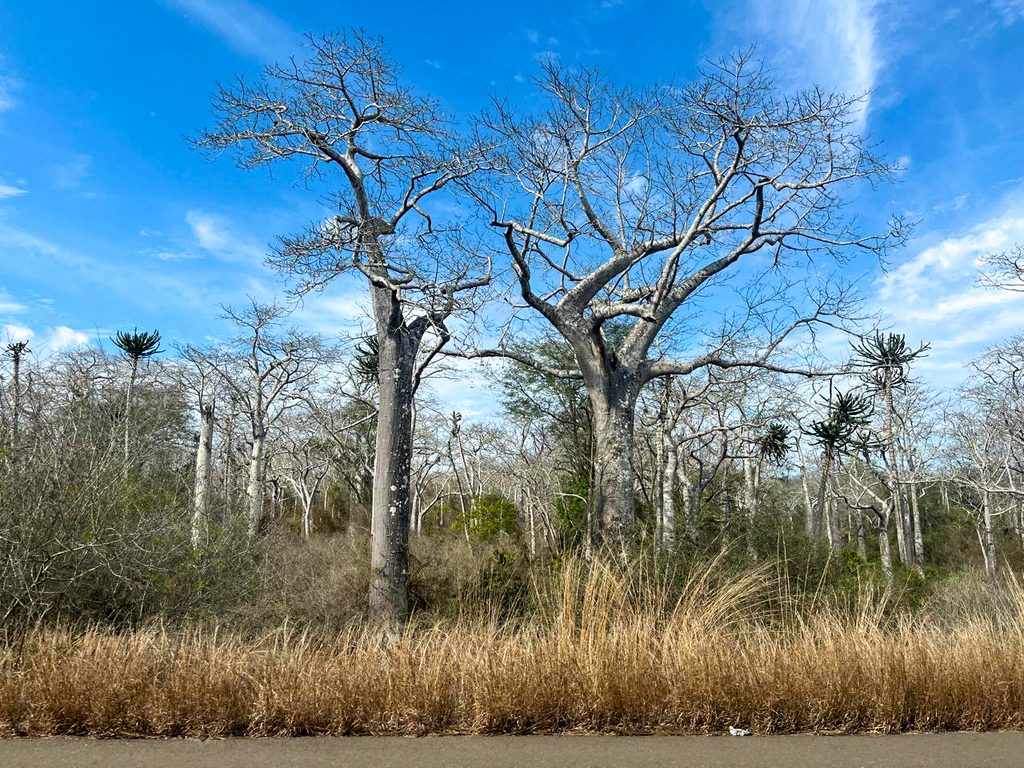
The next section featured photographs of the forest and enormous cross-sections of tree trunks.
Those slices of timber brought back the logging trucks we have seen so often on our travels through Congo and Angola, carrying immense trees away from the forests.
Every time we pass one, something inside me tightens.
Looking at the size of those trunks, I could only wonder how many decades—or centuries—it had taken for those trees to grow.
The wider Congo Basin contains the world’s second-largest tropical rainforest after the Amazon. These forests matter enormously for wildlife, the people who depend on them and the planet’s climate.
We did not see replanting along the roads we travelled. That does not tell us everything happening beyond our route, but it left me with questions. How are these forests being managed? What is being protected? And how much of their value will remain for future generations?
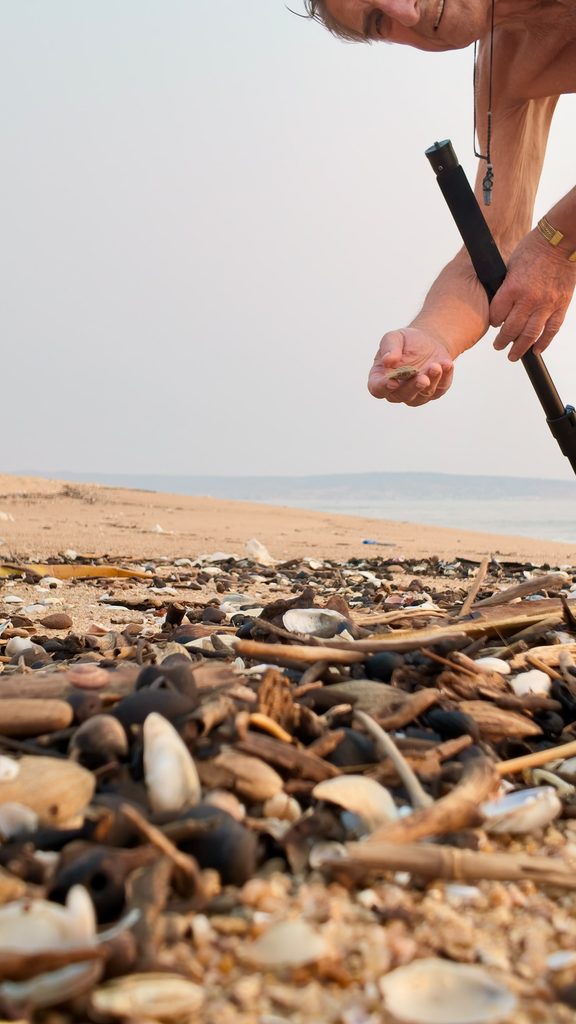
I have similar questions when walking along Cabinda’s beautiful beaches and seeing what appears to be oil pollution.
For communities who depend on the sea for food and their livelihoods, a clean coastline is essential. I find myself wondering how pollution is investigated, who is responsible for cleaning it up, and what support reaches people whose livelihoods are affected.
To my mind, companies benefiting from oil extraction should also carry a strong responsibility to prevent spills, restore damaged environments and support affected communities.
Standing between a beautiful sea and forests of such richness, it is hard not to ask what lasting benefit these resources will bring to the people who call this place home.
The people we will remember
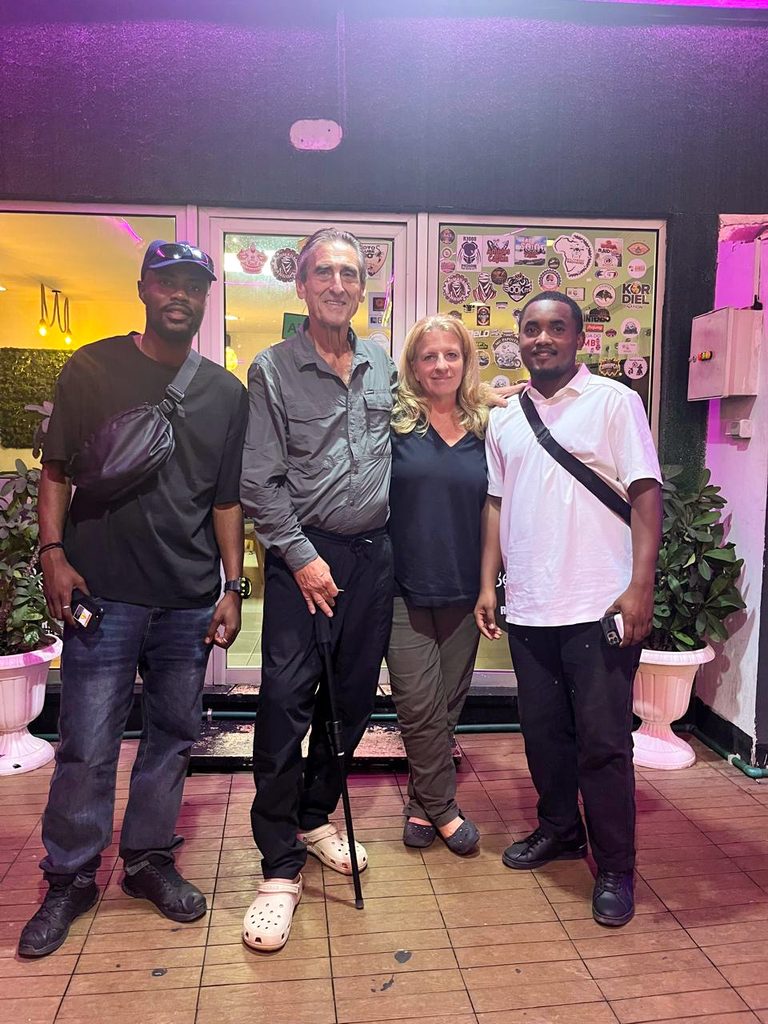
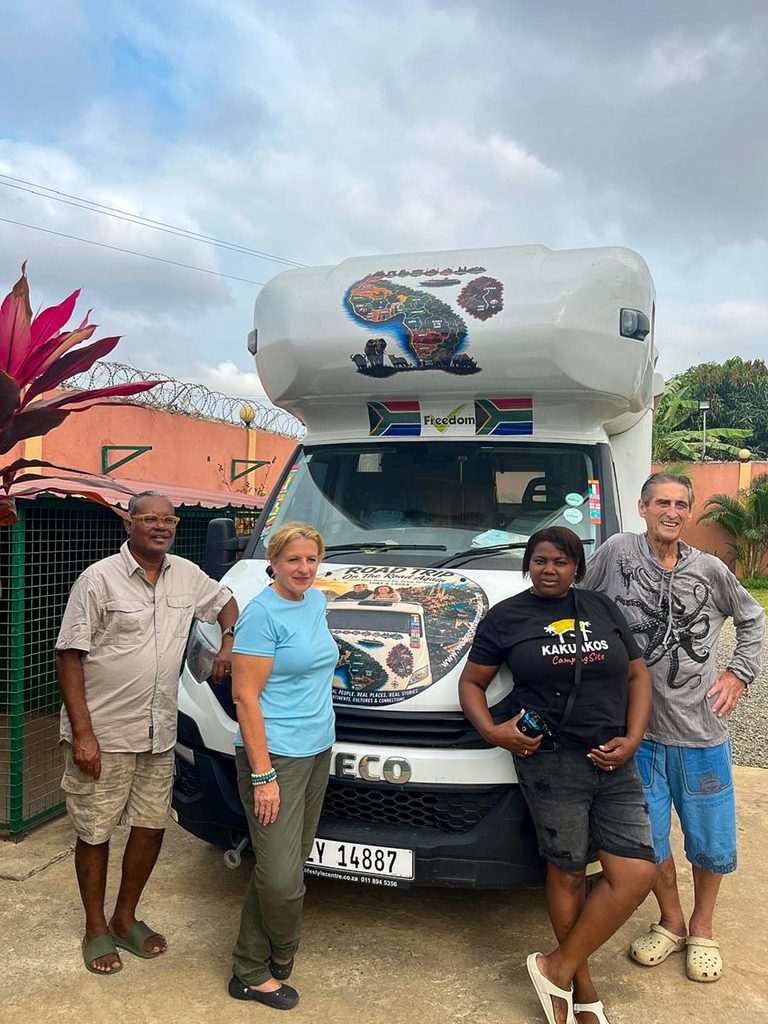
At the end of our museum visit, the staff gathered on the steps for photographs with us. It was such a sweet gesture and a lovely way to finish the tour.
We also visited a primary school this morning, where the children were so excited to see us. Their welcome was another bright moment in this unexpectedly extended stay.
So yes, we are still waiting for the ferry.
There has been frustration, paperwork and rather a lot of “tomorrow”. But there has also been Roger, the kindness of the priests, an extraordinary Sunday service, colourful dresses, beach walks and a museum full of stories.
When we eventually leave Cabinda, those are the memories we will carry with us.
And hopefully, one of these tomorrows will finally include a ferry.